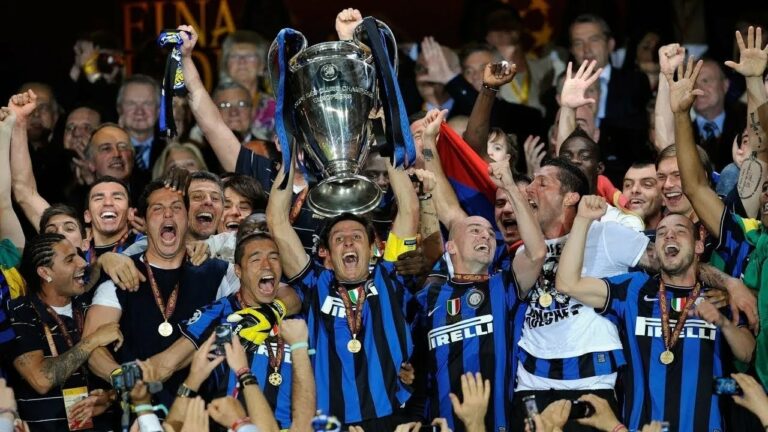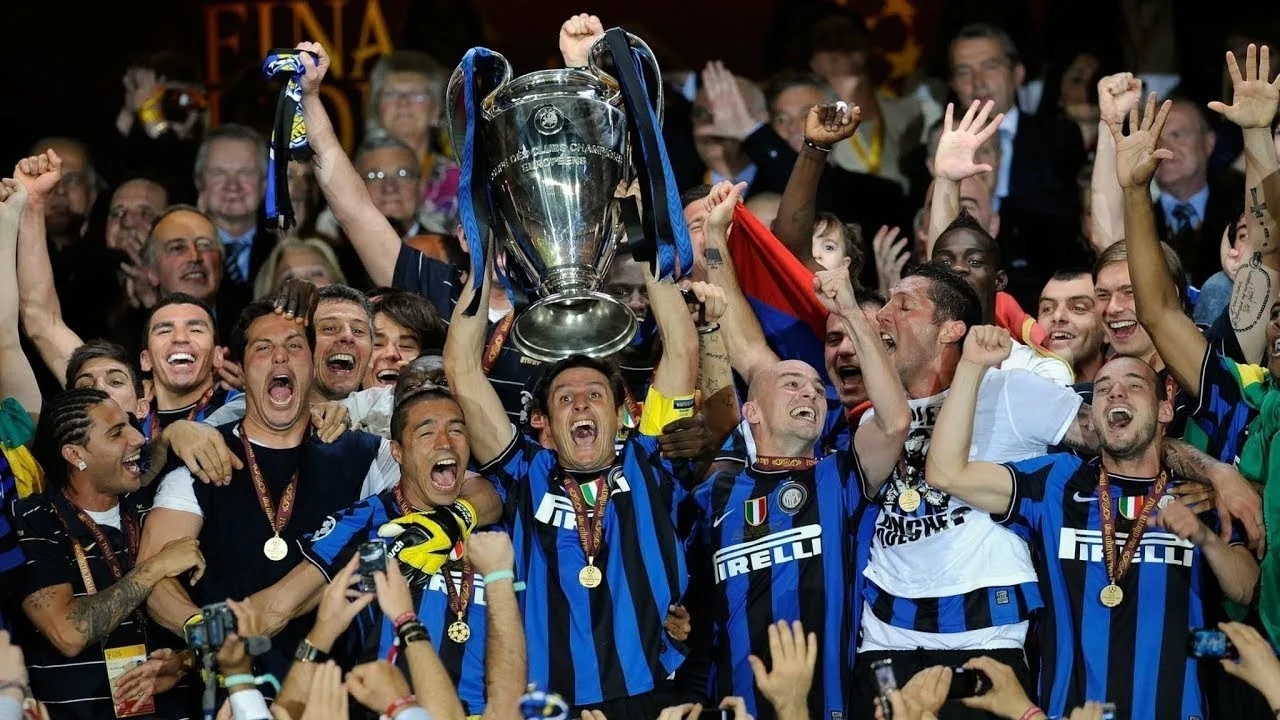
As the group stage of the upcoming Champions League kicks off on September 16, 36 teams will compete from September to January for a shot at the knockout rounds. Bookmakers have traditionally favored giants like Barcelona, Real Madrid, PSG, and Liverpool. However, intriguing historical parallels hint that the 2025/2026 Champions League winner could be none other than Inter Milan.
Historical Parallels Rooted in Munich
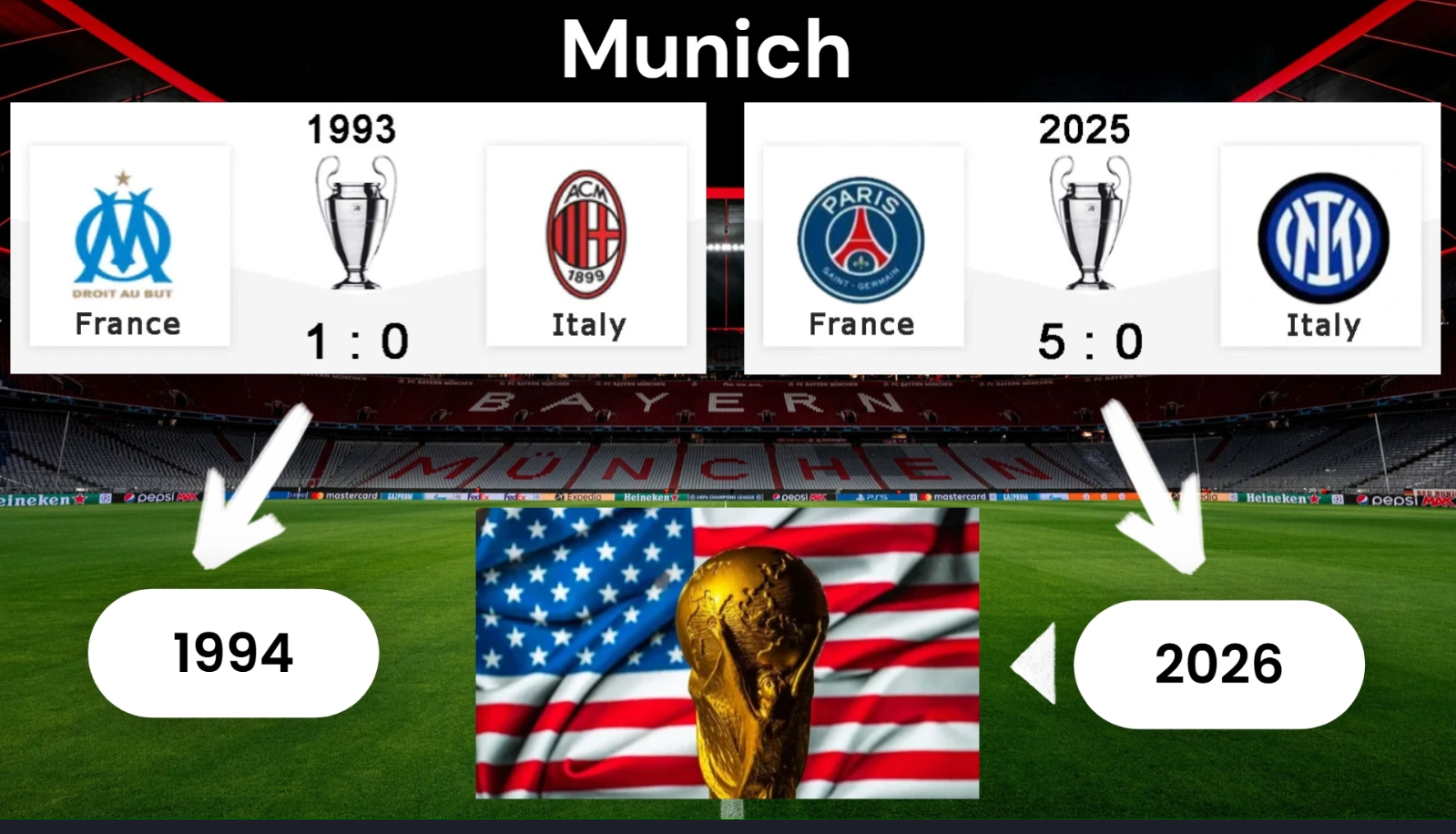
These parallels are closely linked to Munich—a city that has historically played a pivotal role in Champions League finals. It was in Munich that the previous tournament’s final was held, where Inter Milan narrowly lost to Paris Saint-Germain. Munich has a special reputation as a “cradle” of new champions: in every final hosted there, the victorious team was celebrating their first-ever European Cup victory.
Here are some notable examples:
- 1979: Nottingham Forest (England) defeated Malmö (Sweden)
- 1993: Marseille (France) defeated Milan (Italy)
- 1997: Borussia Dortmund (Germany) defeated Juventus (Italy)
- 2012: Chelsea (England) beat Bayern Munich (Germany) away
- 2025: PSG (France) defeated Inter (Italy)
London and Munich: A Historic Connection
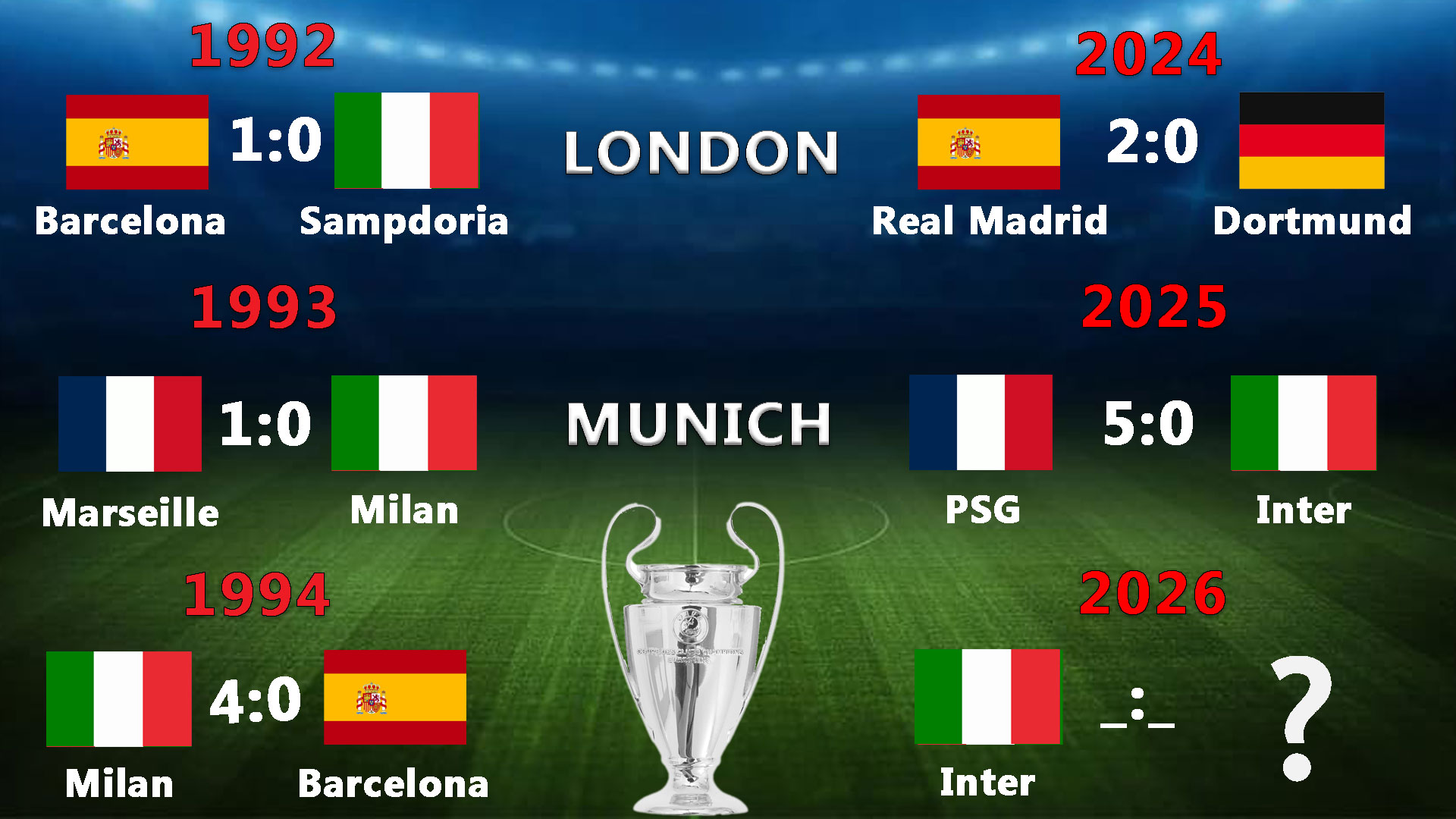
The finals in Munich (1993 and 2025) follow finals in London, where Spanish clubs won—Barcelona in 1992 and Real Madrid in 2024. This sequence suggests a possible cycle linking London and Munich finals.
A Pattern of Resilience and Repetition
Teams that participated in Munich finals always reached the next final of Europe’s top club competition, with notable success:
Nottingham Forest (1980): After Munich, they won their second European Cup, defeating Hamburg.
Milan (1994): Following their Munich loss, Milan reached and won the final against Barcelona.
Juventus (1998): After losing in Munich, Juventus made it to the final again but fell to Real Madrid.
Bayern Munich (2013): After a home defeat to Chelsea, Bayern returned to the final and triumphed over Dortmund.
In fact, In three out of four cases, the team that participated in the Munich final won the next final, and only lost once — highlighting Munich’s significance as a predictor of future success.
The Unique Case of Nottingham Forest
The only time a Munich final winner also claimed the next title was before the Champions League era, achieved by Nottingham Forest in the early 1980s.
Trends in the Champions League Era
Since the competition’s rebranding, a different pattern has emerged: teams that lose in Munich always reach the next final, with two out of three such teams winning the following year. Juventus remains the only team to lose again the following year after the Munich final.
The London-Munich Cycle
An especially compelling pattern emerges when Munich finals follow immediately after London finals:
When a London final is followed by a Munich final, the participant of the Munich final has always gone on to win the next Champions League.
Historical Periods of Note:
1978–1980 (European Champions Cup):
1978 (London): European Cup Final
1979 (Munich): Nottingham Forest wins European Cup
1980: Nottingham Forest wins again
1992–1994 (Champions League):
1992 (London): Champions League Final
1993 (Munich): Milan loses
1994: Milan wins the final
2011–2013 (Champions League):
2011 (London): Champions League Final
2012 (Munich): Bayern loses at home
2013: Bayern wins the final
In the era of the Champions League, when the Munich final directly followed a London final, the team that lost in Munich then reached and won the next final—highlighting a pattern of resilience and revival.
Looking Ahead: Parallels with 1992–1994
The current scenario mirrors the 1992–1994 period:
The 1992 London final was won by a Spanish club.
In Munich, an Italian team (Milan) defeated a French team (Marseille).
In 1994, Milan triumphed again.
Applying this pattern to today:
The 2024 London final was won by a Spanish club.
The 2025 Munich final saw a French team defeat an Italian club (Inter).
Therefore, in 2026, it’s plausible that an Italian team—most likely Inter—will reach the final and emerge victorious.
Inter’s Underdog Status and Historical Potential
Despite a disappointing loss to PSG in the previous final and the departure of head coach Simone Inzaghi—whose leadership was instrumental in recent successes—Inter’s prospects shouldn’t be underestimated. Historically, Inter have always needed foreign coaches to clinch European titles; Inter’s past triumphs include victories under Argentine manager Helenio Herrera and Portuguese José Mourinho.
A Long Drought for Italian Clubs
The longest gap between victories by Italian clubs in the European Cup was 16 years. Juventus ended this drought in 1985, following Milan’s victory in 1969. The most recent Italian triumph in the Champions League occurred in 2010, when Inter Milan secured the title. It seems that now, once again, Inter is poised to break the current 16-year dry spell.
Conclusion
History suggests a fascinating possibility: Inter Milan, often underestimated, may be poised to make history again in 2026. With patterns of Munich finals predicting subsequent winners and the current parallels to past successful cycles, the stars might just be aligning for Italy’s proud club to lift Europe’s most coveted trophy once more.
About The Author